The Most Popular and Widely Used Tamil Fonts: From Print to Pixel
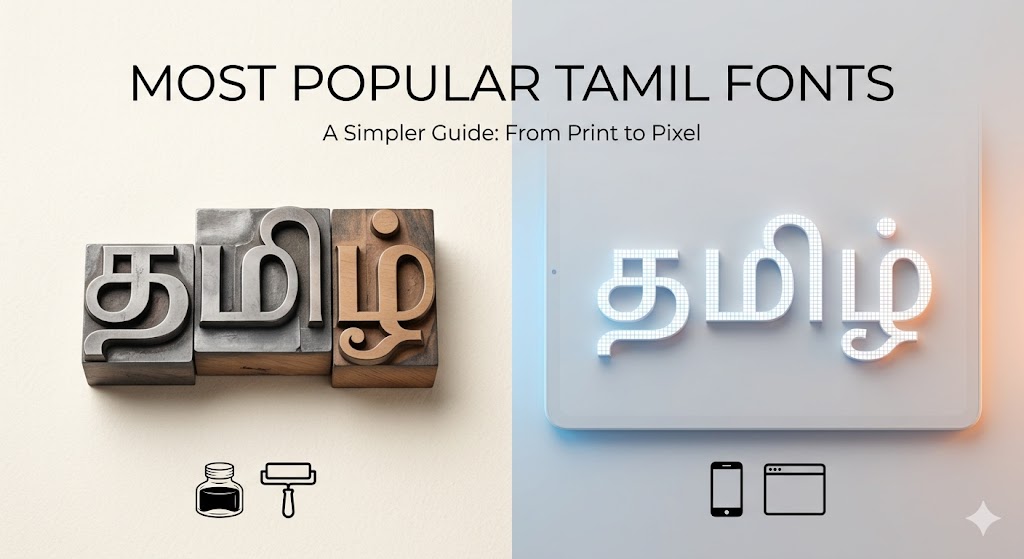
When working with Tamil typography, the "best" font often depends on your medium. The fonts that dominate traditional desktop publishing (DTP) and print shops in Tamil Nadu and Sri Lanka are vastly different from the modern Unicode fonts used to build today's websites and apps.
Whether you are designing a wedding invitation, publishing a book, or coding a modern UI, here is a breakdown of the most popular and widely used Tamil fonts across all platforms.
1. Bamini (The Undisputed King of Print)
-
Type: Legacy / Non-Unicode
-
Best For: DTP, banners, wedding invitations, and traditional print.
-
Overview: If you walk into any local print shop in South India or Sri Lanka, Bamini is the default. Decades old, this legacy font requires a specific phonetic keyboard layout (often referred to as the Bamini layout). While it is not suited for modern web design (as it isn't Unicode compliant), it remains the most universally recognized and used font in Tamil print media.
2. Latha (The Windows Pioneer)
-
Type: Unicode (System Default)
-
Best For: Everyday reading, Microsoft Word documents, and basic digital text.
-
Overview: For millions of users, Latha was their first introduction to reading Tamil on a computer. Included as the default Tamil Unicode font in older versions of Microsoft Windows, it is highly legible and functional. While modern designers might find it a bit plain for creative work, its sheer install base makes it one of the most widely consumed Tamil fonts in the world.
3. Noto Sans Tamil (The Modern Digital Standard)
-
Type: Unicode (Google Font)
-
Best For: Android apps, modern web design, and cross-platform UI.
-
Overview: Developed by Google to eradicate missing characters across the web, Noto Sans Tamil is the default font on Android devices and countless modern websites. Its clean, unmodulated strokes make it incredibly crisp on high-resolution displays. If you are building a digital product today, this is likely your starting point.
4. Kalki
-
Type: Legacy / DTP
-
Best For: Magazine layouts, editorial design, and elegant print.
-
Overview: Named after the famous Tamil magazine, Kalki-style fonts are characterized by their traditional, slightly calligraphic elegance. They are widely used in desktop publishing for literary works, magazines, and newspapers where a sophisticated, classical aesthetic is required.
5. Vijaya
-
Type: Unicode (System Default)
-
Best For: Long-form reading and formal documents.
-
Overview: Another staple from the Microsoft Windows ecosystem, Vijaya features a higher contrast between thick and thin strokes compared to Latha. It has a slightly more traditional, "bookish" feel, making it an excellent choice for reading long digital documents or printing formal letters.
6. Hind Madurai
-
Type: Unicode (Google Font)
-
Best For: User interfaces, bilingual English/Tamil design.
-
Overview: When it comes to modern UI/UX design, Hind Madurai is incredibly popular. It was specifically designed to harmonize with Latin letterforms, making it the perfect choice for websites and apps that feature both English and Tamil text side-by-side.
7. Senthamil (Font Bundle)
-
Type: Legacy / DTP
-
Best For: Graphic design, YouTube thumbnails, and local advertising.
-
Overview: Senthamil isn't a single font, but rather a wildly popular bundle of legacy fonts used by graphic designers. It includes hundreds of stylized, bold, and decorative fonts (often used with software like Adobe Photoshop or CorelDRAW) that dominate Tamil YouTube thumbnails, movie posters, and street banners.
8. Mukta Malar
-
Type: Unicode
-
Best For: Digital publishing and contemporary branding.
-
Overview: Fast becoming a favorite among modern typography enthusiasts, Mukta Malar offers excellent readability and extensive support for complex Tamil character combinations. It strikes a great balance between traditional legibility and contemporary aesthetics.
💡 A Quick Guide for Designers: Legacy vs. Unicode
-
Use Legacy Fonts (Bamini, Senthamil): Only if you are designing strictly for print, making images (like posters or thumbnails), and using older DTP software. You will likely need a special keyboard converter to type in these.
-
Use Unicode Fonts (Noto, Latha, Hind): For anything that involves the internet, apps, Microsoft Office, or text that needs to be copied, pasted, and searched by a computer.