100 Common Tamil Words with English Meanings for Beginners
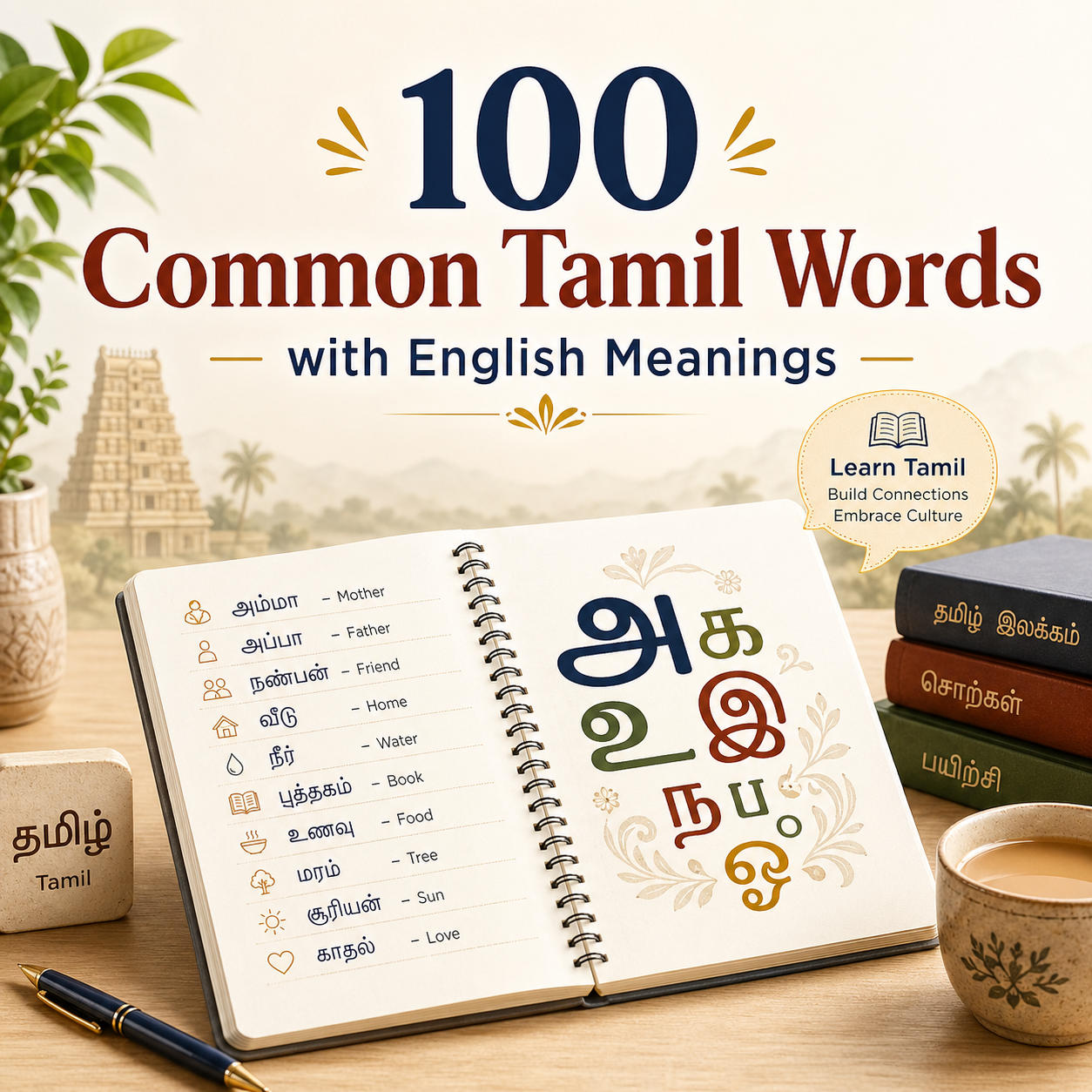
Tamil is one of the world’s oldest living languages and is spoken by millions of people in India, Sri Lanka, Singapore, Malaysia, and many other countries around the world. For English speakers, learning Tamil may seem challenging at first because it has its own script, unique sounds, and different sentence patterns. However, one of the easiest ways to begin is by learning common Tamil words used in daily life.
This guide gives you 100 common Tamil words with English meanings and simple transliterations. The transliteration is not perfect because Tamil sounds do not always match English letters exactly, but it will help beginners understand the basic pronunciation. If you are new to Tamil, you may also want to read related guides such as Tamil Alphabet for Beginners, Spoken Tamil vs Written Tamil, and Basic Tamil Phrases for Daily Use.
Why Learn Common Tamil Words First?
Learning common words first gives you a strong foundation. Instead of memorizing difficult grammar rules immediately, you can start recognizing words you hear in conversations, songs, films, and everyday speech. Words like “water,” “food,” “house,” “mother,” “friend,” and “thank you” are practical and easy to use.
Tamil also has differences between formal written Tamil and casual spoken Tamil. Some words may be pronounced differently depending on the region, especially between Indian Tamil and Sri Lankan Tamil. Still, the words listed below are useful for beginners and widely understood.
100 Common Tamil Words with English Meanings
| No. | Tamil Word | Transliteration | English Meaning |
|---|---|---|---|
| 1 | வணக்கம் | Vanakkam | Hello / Greetings |
| 2 | நன்றி | Nandri | Thank you |
| 3 | ஆம் | Aam | Yes |
| 4 | இல்லை | Illai | No |
| 5 | நான் | Naan | I |
| 6 | நீ | Nee | You |
| 7 | அவன் | Avan | He |
| 8 | அவள் | Aval | She |
| 9 | அது | Adhu | It / That |
| 10 | நாம் | Naam | We |
| 11 | அம்மா | Amma | Mother |
| 12 | அப்பா | Appa | Father |
| 13 | அண்ணா | Anna | Elder brother |
| 14 | அக்கா | Akka | Elder sister |
| 15 | தம்பி | Thambi | Younger brother |
| 16 | தங்கை | Thangai | Younger sister |
| 17 | மகன் | Magan | Son |
| 18 | மகள் | Magal | Daughter |
| 19 | குடும்பம் | Kudumbam | Family |
| 20 | நண்பன் | Nanban | Friend |
| 21 | வீடு | Veedu | House / Home |
| 22 | பள்ளி | Palli | School |
| 23 | கடை | Kadai | Shop |
| 24 | சந்தை | Sandhai | Market |
| 25 | கோவில் | Kovil | Temple |
| 26 | மருத்துவமனை | Maruthuvamanai | Hospital |
| 27 | தெரு | Theru | Street |
| 28 | நகரம் | Nagaram | City |
| 29 | கிராமம் | Gramam | Village |
| 30 | நாடு | Naadu | Country |
| 31 | தண்ணீர் | Thanneer | Water |
| 32 | உணவு | Unavu | Food |
| 33 | சோறு | Soru | Cooked rice / Meal |
| 34 | பால் | Paal | Milk |
| 35 | தேநீர் | Theneer | Tea |
| 36 | காபி | Kaapi | Coffee |
| 37 | பழம் | Pazham | Fruit |
| 38 | காய்கறி | Kaikari | Vegetable |
| 39 | உப்பு | Uppu | Salt |
| 40 | சர்க்கரை | Sarkkarai | Sugar |
| 41 | நாள் | Naal | Day |
| 42 | இன்று | Indru | Today |
| 43 | நேற்று | Netru | Yesterday |
| 44 | நாளை | Naalai | Tomorrow |
| 45 | காலை | Kaalai | Morning |
| 46 | மாலை | Maalai | Evening |
| 47 | இரவு | Iravu | Night |
| 48 | நேரம் | Neram | Time |
| 49 | மணி | Mani | Hour / Bell / O’clock |
| 50 | வாரம் | Vaaram | Week |
| 51 | கண் | Kan | Eye |
| 52 | காது | Kaadhu | Ear |
| 53 | மூக்கு | Mookku | Nose |
| 54 | வாய் | Vaai | Mouth |
| 55 | கை | Kai | Hand |
| 56 | கால் | Kaal | Leg / Foot |
| 57 | தலை | Thalai | Head |
| 58 | மனம் | Manam | Mind / Heart |
| 59 | உடல் | Udal | Body |
| 60 | முடி | Mudi | Hair |
| 61 | பெரியது | Periyadhu | Big |
| 62 | சிறியது | Siriyadhu | Small |
| 63 | நல்லது | Nalladhu | Good |
| 64 | கெட்டது | Kettadhu | Bad |
| 65 | புதியது | Pudhiyadhu | New |
| 66 | பழையது | Pazhaiyadhu | Old |
| 67 | அழகு | Azhagu | Beauty / Beautiful |
| 68 | சூடு | Soodu | Heat / Hot |
| 69 | குளிர் | Kulir | Cold |
| 70 | வேகம் | Vegam | Speed / Fast |
| 71 | வா | Vaa | Come |
| 72 | போ | Po | Go |
| 73 | சாப்பிடு | Saappidu | Eat |
| 74 | குடி | Kudi | Drink |
| 75 | பார் | Paar | See / Look |
| 76 | கேள் | Kel | Listen / Ask |
| 77 | பேசு | Pesu | Speak |
| 78 | படி | Padi | Read / Study |
| 79 | எழுது | Ezhudhu | Write |
| 80 | தூங்கு | Thoongu | Sleep |
| 81 | அன்பு | Anbu | Love / Affection |
| 82 | மகிழ்ச்சி | Magizhchi | Happiness |
| 83 | துக்கம் | Thukkam | Sadness |
| 84 | பயம் | Bayam | Fear |
| 85 | கோபம் | Kobam | Anger |
| 86 | நம்பிக்கை | Nambikkai | Trust / Hope |
| 87 | அமைதி | Amaidhi | Peace / Calmness |
| 88 | வலி | Vali | Pain |
| 89 | சிரிப்பு | Sirippu | Laughter / Smile |
| 90 | ஆசை | Aasai | Desire / Wish |
| 91 | பணம் | Panam | Money |
| 92 | வேலை | Velai | Work / Job |
| 93 | புத்தகம் | Puthagam | Book |
| 94 | மொழி | Mozhi | Language |
| 95 | தமிழ் | Tamil | Tamil |
| 96 | பெயர் | Peyar | Name |
| 97 | வாழ்க்கை | Vaazhkai | Life |
| 98 | உலகம் | Ulagam | World |
| 99 | கடல் | Kadal | Sea / Ocean |
| 100 | மழை | Mazhai | Rain |
Useful Notes for Beginners
When learning these Tamil words, remember that pronunciation is very important. For example, the Tamil letter “ழ” is often written as “zh” in English transliteration. You can see this in words like தமிழ் and மழை. This sound is unique and may take time to pronounce correctly. Do not worry if it feels difficult at first. Many learners slowly improve by listening to native Tamil speakers and repeating the words aloud.
Another useful thing to know is that Tamil words may change slightly depending on how they are used in a sentence. For example, a noun may take an ending to show direction, possession, or location. This is normal in Tamil grammar. At the beginning stage, focus on recognizing the basic word first. Grammar can be learned step by step later.
How to Practice These Tamil Words
The best way to remember Tamil vocabulary is to use the words in simple daily practice. Start with ten words at a time. Read the Tamil script, say the transliteration aloud, and then repeat the English meaning. You can also make flashcards with the Tamil word on one side and the English meaning on the other side.
Try grouping words by theme. For example, learn family words like அம்மா, அப்பா, அண்ணா, and அக்கா together. Then learn food words, body parts, time words, and action words. Grouping vocabulary makes it easier for your brain to remember.
You can also practice by making short sentences. For example:
- நான் வருகிறேன் - Naan varugiren - I am coming.
- நான் சாப்பிடுகிறேன் - Naan saappidugiren - I am eating.
- என் பெயர் அருண் - En peyar Arun - My name is Arun.
- எனக்கு தண்ணீர் வேண்டும் - Enakku thanneer vendum - I want water.
Spoken Tamil and Written Tamil
One important point for learners is that spoken Tamil and written Tamil are not always the same. Written Tamil is usually more formal and is used in books, newspapers, official writing, and education. Spoken Tamil is used in everyday conversation and may vary by region. For example, Tamil spoken in Chennai may sound different from Tamil spoken in Jaffna, Madurai, or Batticaloa.
This does not mean you need to learn everything at once. Beginners can start with common written forms and slowly become familiar with spoken forms. Once you know the basic vocabulary, listening to Tamil conversations becomes much easier.
Final Thoughts
Learning 100 common Tamil words is a strong first step for anyone who wants to understand the Tamil language. These words can help you recognize everyday vocabulary related to family, food, time, places, emotions, actions, and daily life. As you continue learning, try to read Tamil script, listen to native speakers, and practice simple sentences.
Tamil may look difficult at the beginning, but with regular practice, it becomes easier and more enjoyable. Start with a few words each day, repeat them often, and slowly build your vocabulary. Over time, these small steps will help you understand Tamil more confidently.